

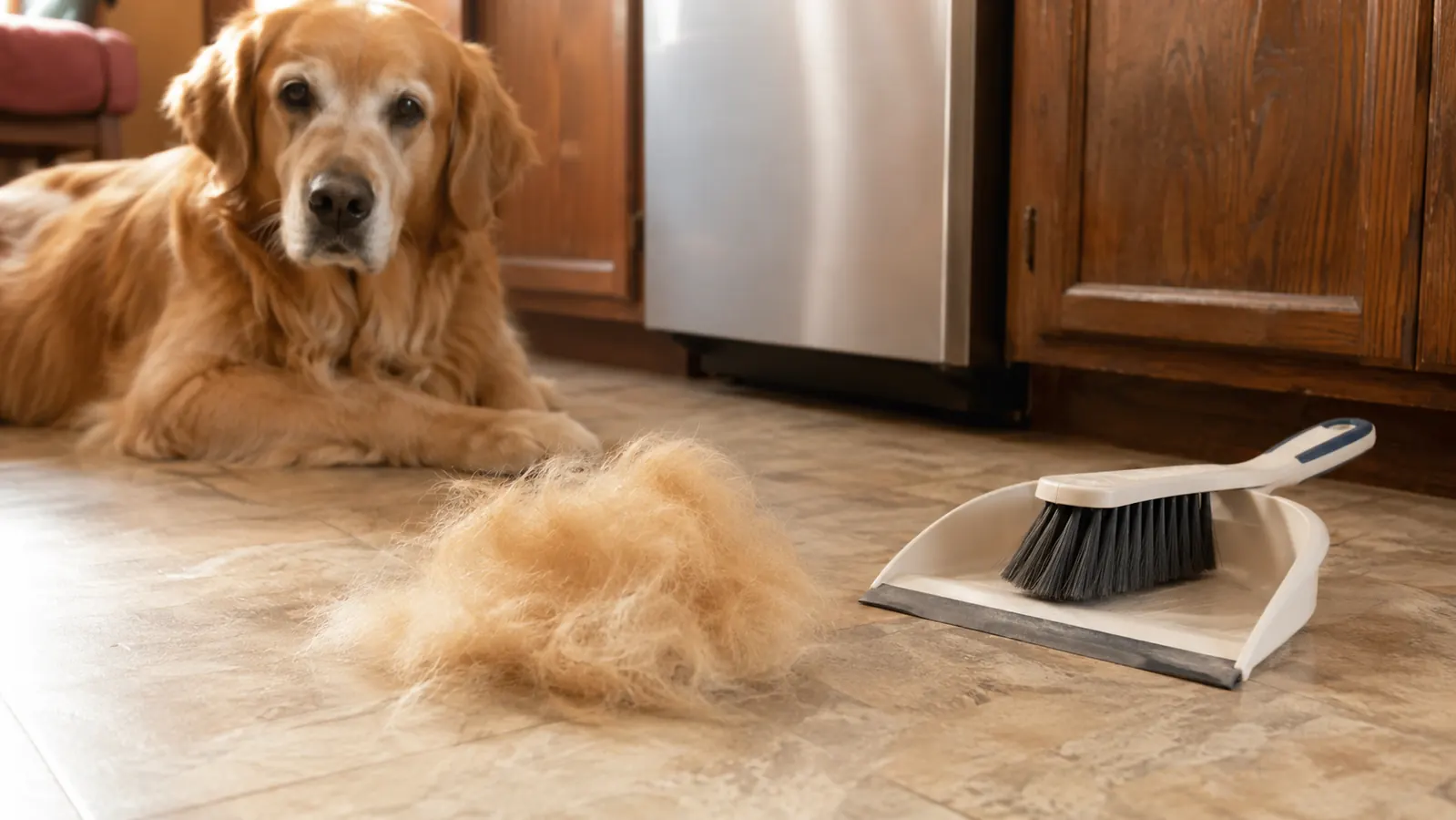
For years I fought a losing battle against dog hair. I'd vacuum on Monday and by Wednesday there'd be a gray tumbleweed of fur rolling across the kitchen floor every time the ceiling fan kicked on. My grandkids would come over in dark leggings and leave looking like they'd rolled around in a wheat field. I tried every lint roller in the drugstore aisle and none of it touched the real problem, which was that the hair coming off my Golden, Duke, never got collected before it landed on my furniture.
What actually turned things around was the Maxpower Planet, an inexpensive double sided deshedding rake, plus a routine I could stick to even on my achy-hands days. It wasn't a fancier vacuum and it wasn't a different couch cover. I want to walk you through exactly how I use it now, step by step, so you can stop the hair before it ever hits the floor instead of chasing it around the house after the fact.
I should say up front, I'm not a groomer and I don't pretend to be one. I'm a grandmother with two grandkids who spend half their visits sprawled on the living room floor with my dog, and I got tired of finding fur in places fur has no business being, inside shoes, on birthday cake, stuck to the dishwasher door. What follows is the exact routine that finally got that under control.
This Little Brush Changed My Cleaning Routine More Than Any Vacuum Ever Did
The tool I use every week is the Maxpower Planet double sided deshedding rake. It's the one I reach for before the fur ever gets loose in my house, and it's gentle enough for my older dog's sensitive skin.
Amazon Check Today's Price on Amazon →Step 1: Pick a Deshedding Tool That Actually Matches Your Dog's Coat
Before you can stop the hair, you need the right kind of brush, and this is where most people go wrong. A slicker brush moves surface hair around. A regular comb barely touches the soft undercoat where most shedding actually starts. What you want is a true deshedding tool, one with rounded teeth that reach down into that undercoat layer and pull the loose hair out without tugging on skin.
I use the Maxpower Planet rake because it's double sided, one side with wider teeth for the first pass through a thick coat, the other side finer for finishing work close to the skin. Duke has that classic Golden double coat, thick and soft underneath with coarser guard hairs on top, and this rake handles both without me needing two separate tools cluttering up a drawer.
If your dog has a short, single coat like a Beagle or a Boxer, a deshedding rake still helps, just expect less volume coming off per session. Long haired or double coated breeds, Goldens, Labs, Huskies, Corgis, German Shepherds, are where a good deshedding brush earns its keep the most, because that's where the hidden undercoat does the real damage to your floors.
Duke is nine now, and his skin isn't as forgiving as it used to be, so the rounded teeth on the Maxpower Planet matter more with an older dog. If your dog is a senior too, or has any bald patches or tender spots, go slower and lighter over those areas rather than skipping the deshedding rake altogether, since gentle regular brushing is actually easier on aging skin than letting mats build up and then having to work them out later.
Step 2: Brush Before a Bath, Never Right After
This one surprised me. I used to bathe Duke first, thinking clean fur would be easier to work with. It's actually backwards. Wet fur mats and clumps, which makes deshedding harder and can pull uncomfortably on the skin. Now I always brush first, a full deshedding session before he ever gets near water.
Brushing before the bath loosens and removes the undercoat that would otherwise trap water and take forever to dry. It also means less hair swirling down the drain and clogging things up, which anyone who has snaked out a bathtub drain full of dog fur will appreciate. A bath on top of an unbrushed coat mostly just rearranges the shedding problem instead of solving it, and I learned that the hard way after a plumber's visit I'd rather not repeat.
Step 3: Work in Small Sections and Let the Rake Do the Work
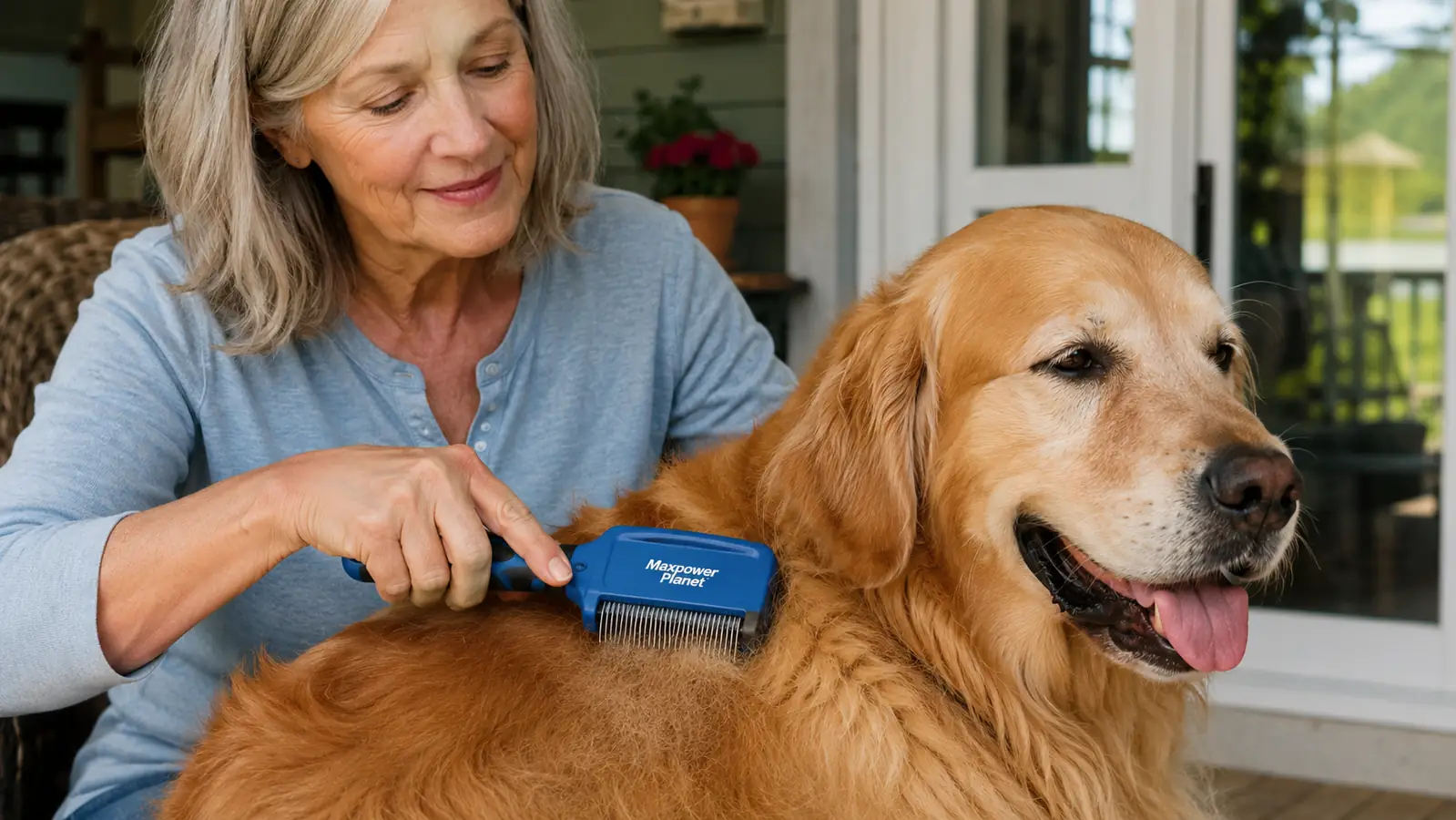
Here's where patience matters more than pressure. I start at the neck and work backward in small sections, maybe four inches at a time, pulling the rake through in the direction the fur grows. You don't need to press hard. The Maxpower Planet catches the loose undercoat with light, steady strokes, and if you're having to force it, you're probably tugging on hair that isn't ready to come out yet.
I pay extra attention to the areas that mat first, behind the ears, under the front legs, and along the britches on the back legs. Those spots hold onto loose fur the longest and are usually where a dog's coat looks patchy or dull if they get skipped during a deshedding session.
For a dog Duke's size, a full session runs about fifteen minutes if I'm thorough. Smaller dogs take less, and honestly some days my hands need the breaks built in anyway. There's no rule that says it has to happen all at once. I've broken a session into two five-minute stretches on days my arthritis is acting up, and the results are just as good by the end of the week.
Step 4: Set a Weekly Rhythm, Twice a Week in Shedding Season
The single biggest change for me wasn't the brush, it was putting it on a schedule instead of only reaching for it when I noticed hair everywhere. Saturday mornings, coffee first, then ten to fifteen minutes with the Maxpower Planet on the porch. It's become part of the routine rather than a chore I dread, almost peaceful actually, with Duke leaning into it like it's a massage.
During spring and fall, when Duke blows his coat, I bump it up to twice a week. That's when a deshedding brush truly earns its cost, because the volume of loose undercoat coming off during those seasonal shed cycles is dramatically more than the rest of the year. Staying ahead of it with regular brushing means I'm never dealing with a house full of tumbleweeds all at once, the way I used to before I had a set schedule for it.
I also mark it on the calendar the same way I'd mark a doctor's appointment. It sounds silly for a fifteen minute task, but if I don't put it somewhere I'll see it, the week gets away from me and suddenly it's been two weeks since I picked up the deshedding rake at all.
Step 5: Manage What's Left Between Brushing Sessions
Even the best deshedding routine won't catch a hundred percent of what a dog sheds day to day, so I keep a short between-session plan. A quick once-over with a rubber grooming mitt when Duke hops up on the couch catches the loose surface hair before it settles into the fabric. A lint roller by the front door handles the last bit before company or grandkids sit down.
I also vacuum lighter and less often now, maybe twice a week instead of every other day, because the Maxpower Planet is removing the hair at the source instead of leaving me to chase it across the floor after it's already fallen out on its own. A damp rubber glove run across throw pillows and the couch arms picks up whatever the mitt misses, and it takes about two minutes.
How to Tell the Routine Is Actually Working
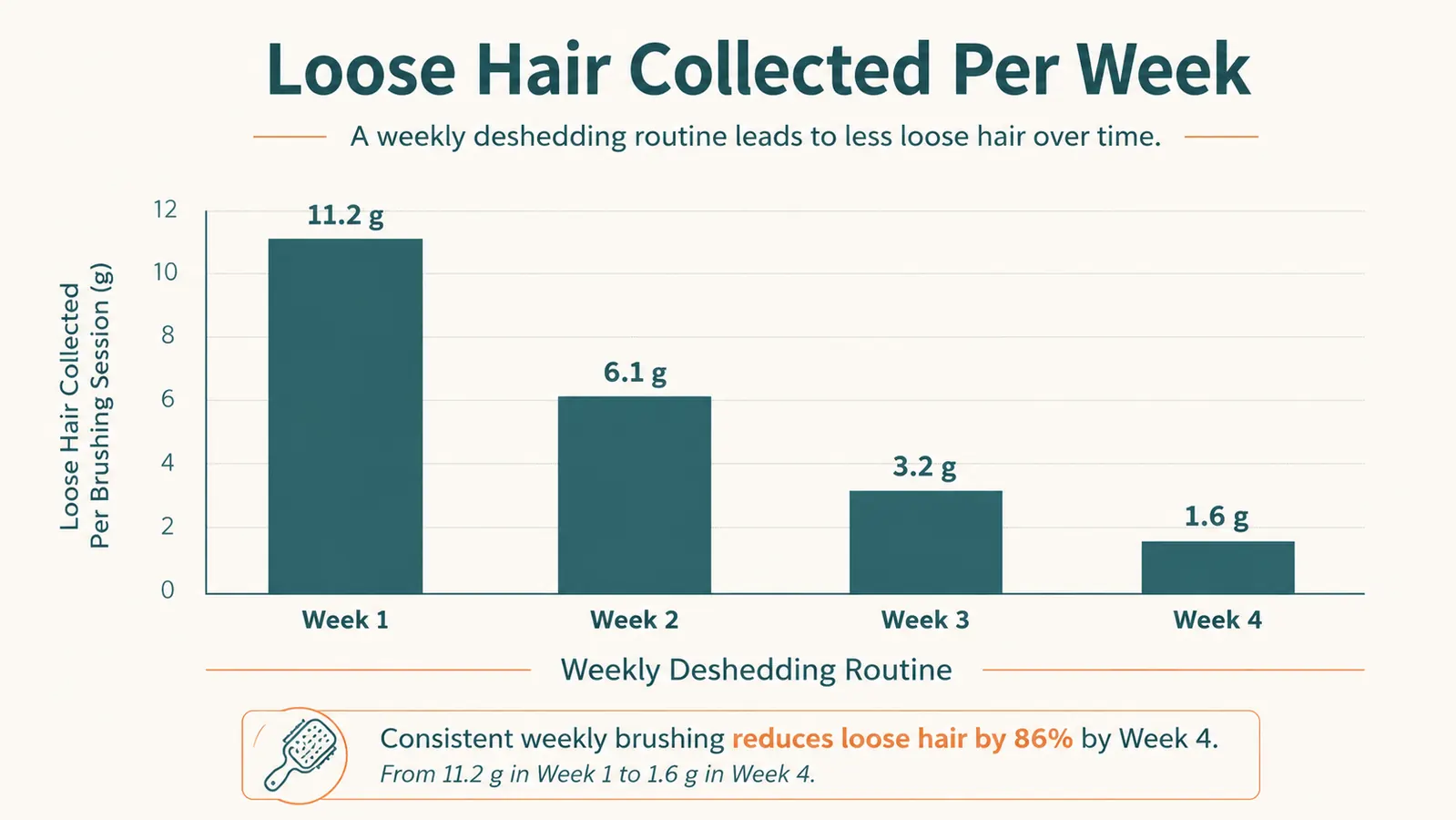
The first sign was the lint roller. I used to go through one every couple of weeks. Now a single roller lasts me over a month, because most of the hair is getting collected on the Maxpower Planet before it ever gets loose enough to land on my clothes or the couch. That's the real test, not how clean the house looks right after vacuuming, but how little you're finding three or four days later.
The second sign is Duke's coat itself. It looks glossier and lies flatter now that the dead undercoat isn't sitting trapped against his skin. A dull, fluffed-out looking coat is often just full of loose hair waiting to fall, and a thorough deshedding session brings the shine back almost immediately.
A Few Mistakes I Made Early On
I used to brush Duke only when I noticed he looked scruffy, which meant I was always playing catch up. Waiting until shedding is obvious means the loose undercoat has already had days or weeks to work its way out onto your furniture. A regular deshedding schedule, done whether or not you think it's needed that week, is what actually keeps ahead of it.
I also used to skip his belly and legs because they're harder to reach with an older dog who doesn't love rolling over anymore. Those areas shed just as much as the back and sides, so now I do a quick pass there too, even if it's shorter and gentler than the rest of the session. It doesn't need to be perfect every time, it just needs to happen consistently.
What Else Helps
Diet plays a bigger role in shedding than most people realize. A coat that's dry or dull tends to shed more heavily, and I noticed a real difference once I made sure Duke's food had enough fatty acids in it. It's not a substitute for regular brushing, but it does make the deshedding sessions a little easier and the coat a little softer to work through.
Brushing outside when the weather allows is a small thing that makes a big difference too. Instead of sweeping a pile of fur off my kitchen floor, most of it blows off the porch or lands in the yard, and my indoor cleanup shrinks down to almost nothing. On rainy days I lay an old towel down first and shake it out over the trash can when I'm done, which keeps the whole thing contained and off my rugs.
Keeping the Brush Itself Clean
This part gets overlooked, but a deshedding rake packed with old fur doesn't work nearly as well as a clean one. I pull the hair out of the teeth after every session, just running my fingers through it into the trash, and give it a quick wash with warm soapy water once a month so it doesn't build up oils and dander over time.
A clean Maxpower Planet also glides through the coat more easily, which means less tugging and a shorter session. It's a small habit, maybe thirty seconds after each brushing, but it's part of why the routine has stuck for me instead of turning into one more thing I dread doing.
I'm not chasing hair around my house anymore. I'm just brushing it out before it ever gets the chance to land there.
Fifteen Minutes on a Saturday Beats an Hour of Vacuuming Every Week
If your floors and furniture are covered in fur no matter how often you clean, the fix usually isn't a better vacuum. It's catching the hair before it falls. This is the deshedding rake I keep by the back door and use every week.
Amazon Check Today's Price on Amazon →