
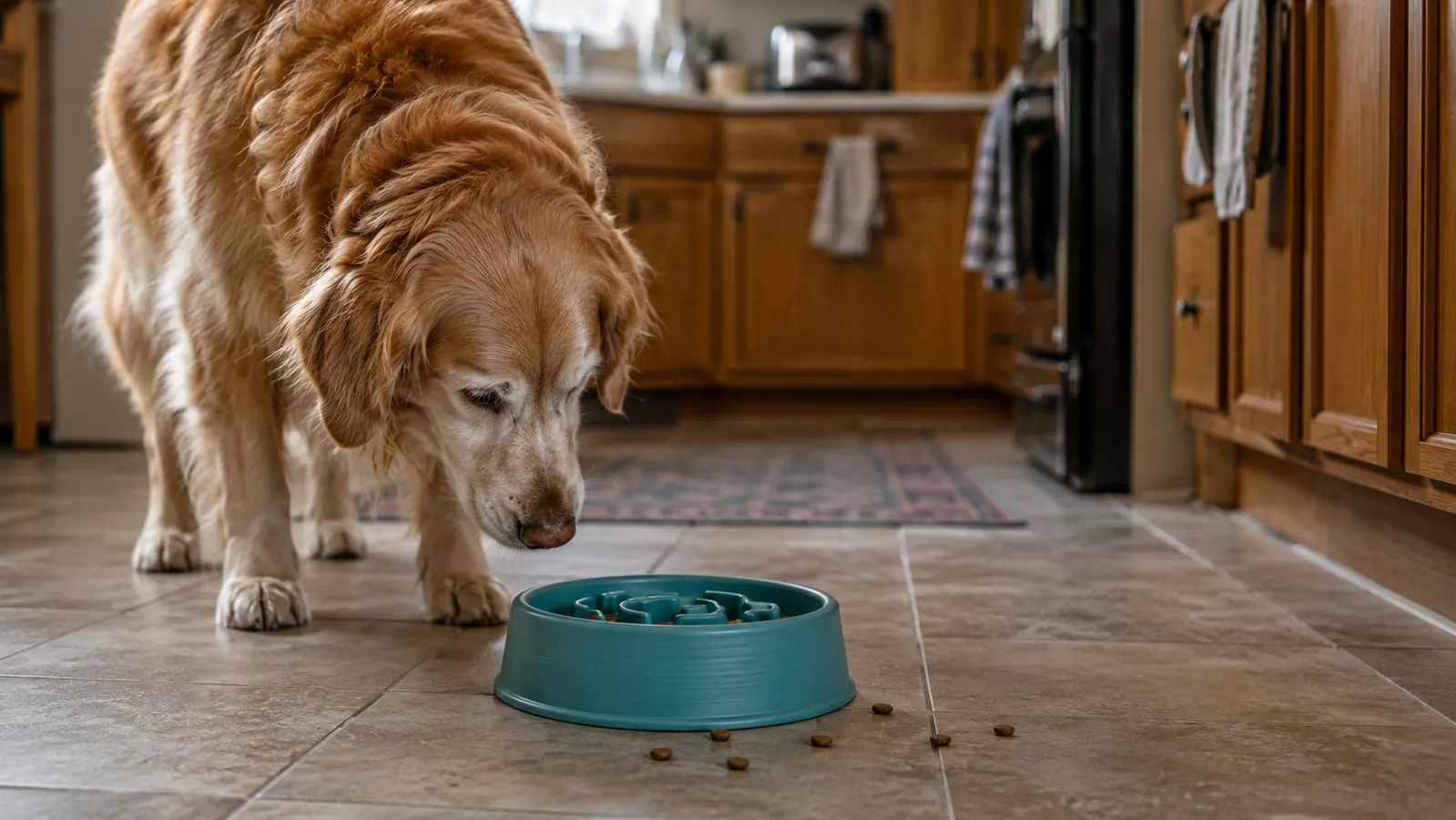
I want to start this one differently than most reviews you'll find for the Outward Hound Fun Feeder Slo Bowl, because most of them read like the bowl walks on water. It doesn't. It's a good, cheap, plastic bowl that did exactly what I needed it to do for Duke, my nine-year-old Golden Retriever, but there are things about it nobody mentioned to me before I bought it, and I had to learn them the hard way over the following months. If you already read my long-term review, you know the short version: it slowed Duke down and stopped him from throwing up his dinner. This one is the version where I tell you what that packaging photo doesn't show you.
I'm not trying to talk you out of it. I'd buy it again in a heartbeat. But I'm sixty-six years old, I've bought a lot of pet gear over the years that looked perfect in the listing and turned out to be a chore in real life, and I promised myself I'd write the review I wish someone had written for me. So here it is, warts and all.
The Quick Verdict
A genuinely useful bowl for a fast eater, but it comes with kibble escapees, a smell that creeps into the grooves over time, and a capacity that surprised me for a dog Duke's size.
Amazon Check Today's Price →Want the Real Story Before You Buy One?
I'll tell you everything, the good and the mildly annoying, so you know exactly what you're getting into before you order one for your own dog. Check today's price while you read.
Amazon Check Today's Price on Amazon →How I've Used It
I almost bought the regular size instead of the large, and I'm glad the listing talked me out of it, because Duke is seventy-two pounds and I don't think the smaller version would have lasted a week with him leaning his whole face into it. When the box arrived, the Outward Hound had a faint plastic smell straight out of the packaging, the kind you get with a lot of molded plastic housewares, and I ran it through a hot dishwasher cycle before Duke ever saw it. That smell was gone by the second wash, but it caught me off guard, since nothing in the listing mentioned it.
I'll be honest, part of why I picked this one over some of the fancier slow feeders was the price. I wasn't going to spend a lot of money on something that might end up sitting in a cabinet if Duke refused to eat out of it, the way he's refused plenty of other things over the years. At current pricing it felt like a low-risk way to try the idea before committing to anything more elaborate, and that low bar is exactly why I'd tell anyone else on the fence to just try it rather than agonize over the decision the way I almost did.
Out of curiosity, early on I tried using a second one of these for Patches, our cat, thinking the ridges might slow her down too since she tends to gobble her wet food and then throw it right back up minutes later. That experiment was a bust. The ridges are sized for a dog's mouth, not a cat's smaller, more delicate bite, and wet food just smeared across the raised bumps instead of forcing her to work around them. She picked at it for a minute, looked unimpressed, and walked off. I went back to her regular flat dish for her food and kept the ridged bowl strictly for Duke's dry kibble, which is really what it's built for.
These days it's part of the regular rotation, morning and evening, same as it's always been. But it took me a few weeks of small adjustments, moving it, refilling it mid-meal, adjusting how much I poured in at once, before it felt like a settled routine instead of something I was still figuring out.
The Thing Nobody Mentions: Kibble Escapees
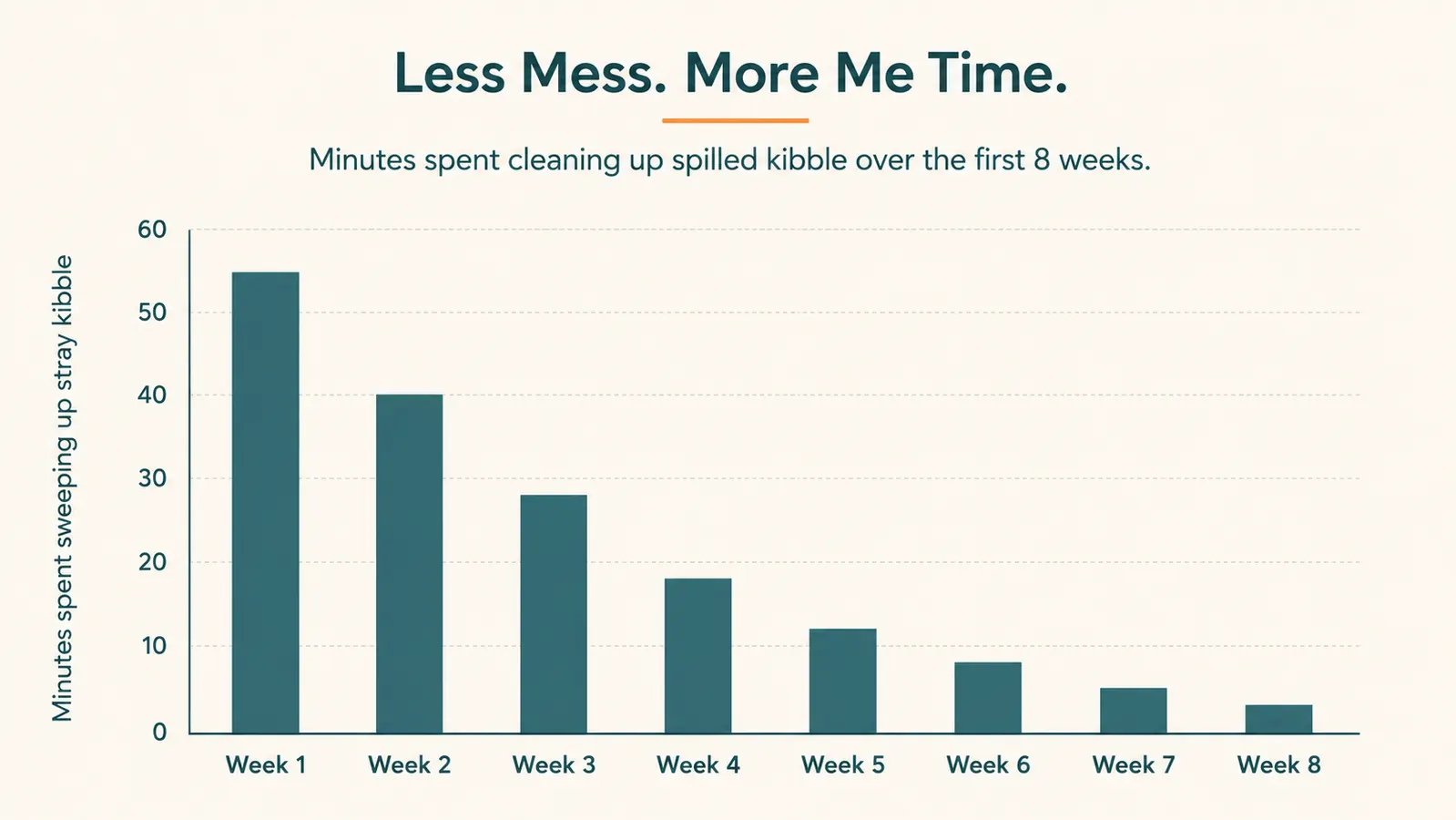
Here's what the product photos don't show you. When a dog the size of Duke works his tongue and nose down into those ridges trying to dig kibble out of the channels, some of it doesn't go into his mouth, it flies out onto the floor. Not a huge amount at any one meal, but enough that I've swept up little scattered rings of kibble around the bowl more mornings than I can count. It's the natural tradeoff of the whole design, the same ridges that slow him down also give him more surfaces to accidentally launch a piece off of.
This matters more in my house than it might in yours, because I've got grandkids running through in socked feet most weekends, and a stray piece of kibble under a bare foot at seven in the morning is not a pleasant surprise. I've started doing a quick floor check after every meal, which wasn't part of my routine with his old flat bowl. It's a small thing, maybe two minutes with a hand broom, but it's a real, ongoing part of owning the Outward Hound that nobody warns you about ahead of time.
What's helped is pouring in a little less kibble at a time and letting him finish one portion before I add more, rather than dumping the whole meal in at once and giving him that much more surface area to fling pieces off of. It's not a perfect fix, but it's cut down the mess noticeably since those first couple of weeks.
The Smell That Creeps Into the Grooves
This is the one that genuinely surprised me. Somewhere around the second month, I started noticing a faint smell coming from the Outward Hound even right after I'd washed it, a little bit sour, a little bit like old kibble dust. It wasn't strong, and you'd have to get your nose right down near it to catch it, but it was there, and it hadn't been there in the first few weeks. Plastic is porous in a way that stainless steel and ceramic aren't, and all those narrow ridges and channels give odor-causing residue a lot more places to hide than a smooth bowl would.
I asked our vet about it at Duke's regular checkup, mostly out of curiosity, and she mentioned something I hadn't heard before: plastic bowls in general are known to hold onto bacteria in their scratches and grooves over time, and some dogs even develop a mild irritation on their chin or muzzle from prolonged contact with plastic, sometimes called plastic dish dermatitis. Duke hasn't had any skin trouble from it, but she recommended giving the bowl a deeper clean with a bit of baking soda every couple of weeks on top of the regular dishwasher cycles, and mentioned that plastic feeding bowls in general are usually worth replacing every year or two rather than treating them as a forever purchase the way you might a stainless bowl.
That's not really a strike against this particular bowl so much as it's true of ridged plastic feeders in general, but it's the kind of thing I wish had been on the label instead of something I had to ask about at a vet visit. Now I do the baking soda scrub every other Sunday, and the faint smell hasn't come back since I started.
It's Not a Diet Bowl, and It's Not a Puzzle Toy
I want to be honest about what this bowl isn't, because I see it marketed in ways that blur the line a little. It does not measure or portion Duke's food for him. It's still on me to scoop out the right amount every time, and if I overfill it, he'll happily eat every bit of the extra, slowly, but he'll eat it. If you're hoping a slow feeder bowl will help a dog lose weight on its own, it won't, not without you also controlling the portions that go into it.
It's also not the kind of interactive puzzle feeder with sliding compartments or hidden treat pockets that some dogs really seem to enjoy working at like a game. Duke treats it more like a mild obstacle than a toy. He's engaged with it, but he's not delighted by it the way I've seen some dogs get with a true puzzle feeder. If you're looking for mental stimulation as much as a slower eating pace, this bowl gives you some of that, but not the full experience a dedicated puzzle toy would.
The Sizing Surprise
The large Outward Hound holds about four cups, which sounds like plenty until you're feeding a seventy-two pound dog who eats close to that in a single meal once you count both his morning and evening portions split out. Some days I have to add a little more kibble partway through because his full meal doesn't quite fit comfortably with room for him to actually work the ridges without spilling everywhere. It's not undersized exactly, it did its job, but I expected a bit more breathing room than I got for a big dog, and I'd have appreciated the listing being clearer about how snug it can feel with a large breed's full meal in it at once.
In practice, I've just started splitting his bigger meals into two rounds rather than trying to cram it all in at once, letting him work through the first portion before I top it off. It adds an extra minute or two of standing at the counter for me, which isn't nothing when my hip is acting up, but it keeps the bowl from overflowing and gives him the full slow-eating benefit instead of him rushing to clear space for more.

The Sound I Didn't Expect
Nobody mentions the noise either. Duke's old flat bowl was nearly silent, just the soft clink of his tags now and then. This one is louder, his nails and tags scrape and click against the raised ridges as he works his way around, and there's a hollow little rattle when he pushes the bowl an inch or two across the tile chasing the last few pieces. It's not obnoxious, but it's noticeable, especially at six in the morning before the coffee's even started, and especially if a grandkid fell asleep on the couch the night before and I'm trying to keep the house quiet.
I got used to it within a couple of weeks, the way you get used to any new household sound, but I know it would bother some people more than it bothers me. Putting the rubber mat underneath helps a little with the scraping across the floor, though it doesn't do much for the nail and tag noise against the ridges themselves. If you're someone who's sensitive to that kind of thing, or you've got a sleeping baby in the next room during feeding time, it's worth knowing about ahead of time rather than being caught off guard by it the first morning.
What I Liked
- Slowed Duke's eating down and stopped the vomiting, which was the whole reason I bought it
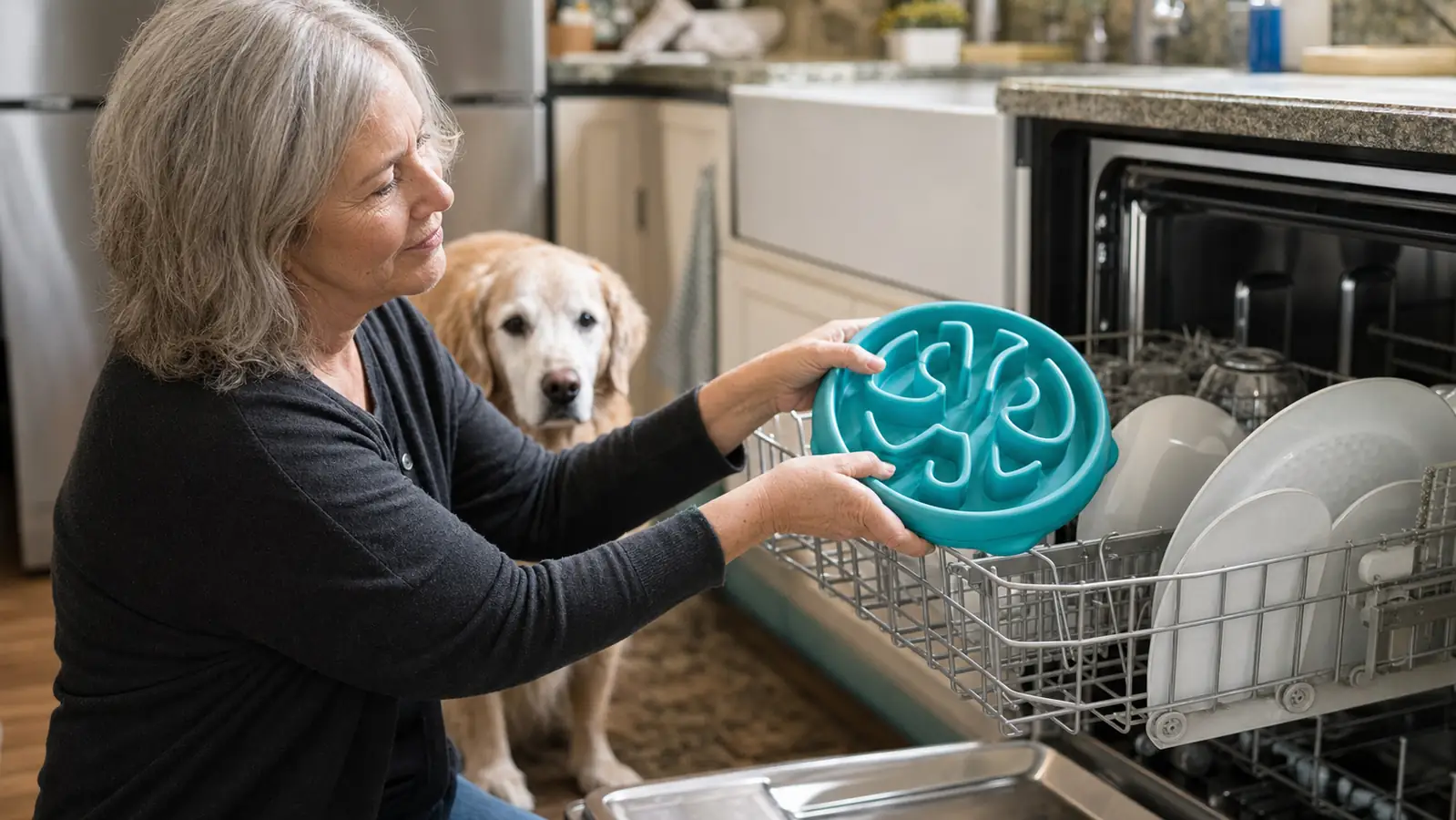
- Dishwasher safe, which matters most on my rough arthritis days
- Held up sturdy with heavy daily use
- Non-slip base keeps it from sliding across the kitchen tile
- Low enough cost that trying it felt like a low-risk decision
Where It Falls Short
- Some kibble ends up on the floor instead of in his mouth, especially early on
- A faint smell can build up in the ridges over time if you skip the deeper cleaning
- Feels snug rather than roomy for a large dog's full meal at once
- Noisier than a flat bowl, with nails and tags clicking against the ridges
- Doesn't work for cats or wet food, despite what you might assume from the listing photos
It's a good, cheap, plastic bowl that did exactly what I needed it to do, but there are things about it nobody mentioned to me before I bought it.
Who This Is For
If your dog gulps his food the way Duke used to and you want a simple, inexpensive first step before spending more on a fancier puzzle feeder, the Outward Hound Fun Feeder is worth trying. It's a good fit if you're willing to sweep a little extra kibble off the floor most days and give the grooves a real scrub every couple of weeks, rather than expecting it to stay perfectly fresh with just a quick dishwasher run. For anyone with sore hands who needs something light and dishwasher safe, it still checks that box even with the extra cleaning step, and if noise around the house isn't a big concern for you, that part won't even register.
Who Should Skip It
If the idea of finding stray kibble on your floor most mornings genuinely bothers you, or if you're not willing to add a periodic deep clean on top of the regular dishwasher cycle, this might frustrate you more than it helps. It's also not the answer if you're hoping it will manage your dog's portions or double as a puzzle toy, since it does neither of those things on its own. And if you were picturing something that works for both a dog and a cat in the house, or you need feeding time to stay completely quiet for a napping baby or a light sleeper, plan around those two things before you order, because this one really is built with a dog's mouth in mind, noise included.
Now You Know the Whole Story, Good and Annoying
I still use this bowl every single day, kibble on the floor and all, because it fixed the one thing that actually mattered to me. See today's price and decide for yourself.
Amazon Check Today's Price on Amazon →